Shopify AI Store Builder: From Rejection to App Store Approval
How I built Shopify AI Store Builder: one-click store creation, AI product research, inventory automation, and Shopify App Store approval after a Theme Asset API rejection.
Project overview
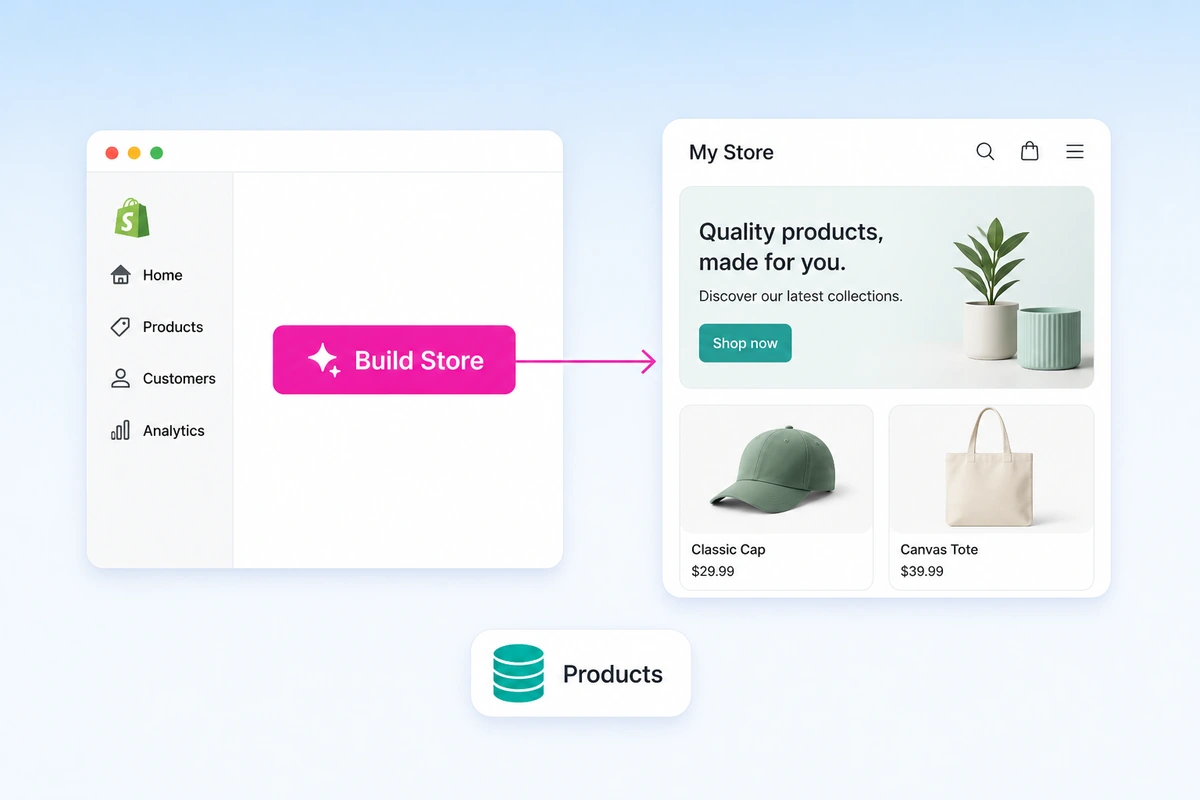
Shopify AI Store Builder is an AI-powered Shopify app I built to shorten the path from product research to a working ecommerce storefront. The product combines store generation, product importing, inventory checks, and repeatable automation in one workflow, then runs as a production application on Railway.
The technical build was only one part of the work. To distribute the app responsibly, I also had to satisfy two separate Shopify review processes: approval for a Theme Asset API exemption and approval for listing in the Shopify App Store. The first exemption request was rejected. I used that feedback to reduce risk, improve the implementation, document the app’s behavior more clearly, and submit again. The revised request was approved, and the completed app later passed App Store review.
The product problem
Launching a Shopify store often requires several disconnected tasks: researching products, deciding what is worth testing, creating product records, setting up storefront content, checking market availability, and responding when inventory changes. For a merchant validating a new idea, that operational overhead delays the moment when real customers can evaluate the offer.
The app was designed around a simpler promise: turn a selected product opportunity into a usable Shopify store with fewer manual steps, while keeping inventory and market conditions visible enough for the merchant to act.
Core goals
- Generate a Shopify storefront through a guided one-click workflow
- Let merchants import products from an AI-scored list of potential winning products
- Detect market and inventory conditions before they become customer-facing problems
- Provide a recovery path when a product goes out of stock
- Meet Shopify’s technical, permission, security, and App Store review requirements
- Run reliably in production on Railway rather than existing only as a local demo
The approval challenge
The app needed controlled access to Shopify theme assets to complete its store-building workflow. That access is reviewed carefully because broad or unexplained theme modification can create security, reliability, and merchant-trust risks.
My first Theme Asset API exemption request was rejected. Instead of treating review as paperwork, I treated the rejection as product and architecture feedback. The reviewer needed stronger evidence that the app’s theme operations were necessary, limited, predictable, and safe for a merchant’s existing storefront.
What I improved before resubmitting
- Narrower operations: limited theme changes to the assets required by the store-building workflow instead of treating theme access as a general editing capability
- Clearer intent: documented exactly when theme operations run, what the app changes, and why the feature cannot be completed with a less privileged alternative
- Safer workflow: improved checks around store state so automation does not blindly overwrite a merchant’s work
- Better failure handling: made partial failures visible and recoverable rather than leaving an unclear half-configured store
- Review evidence: prepared a more direct explanation and test path so Shopify reviewers could reproduce the feature and understand its boundaries
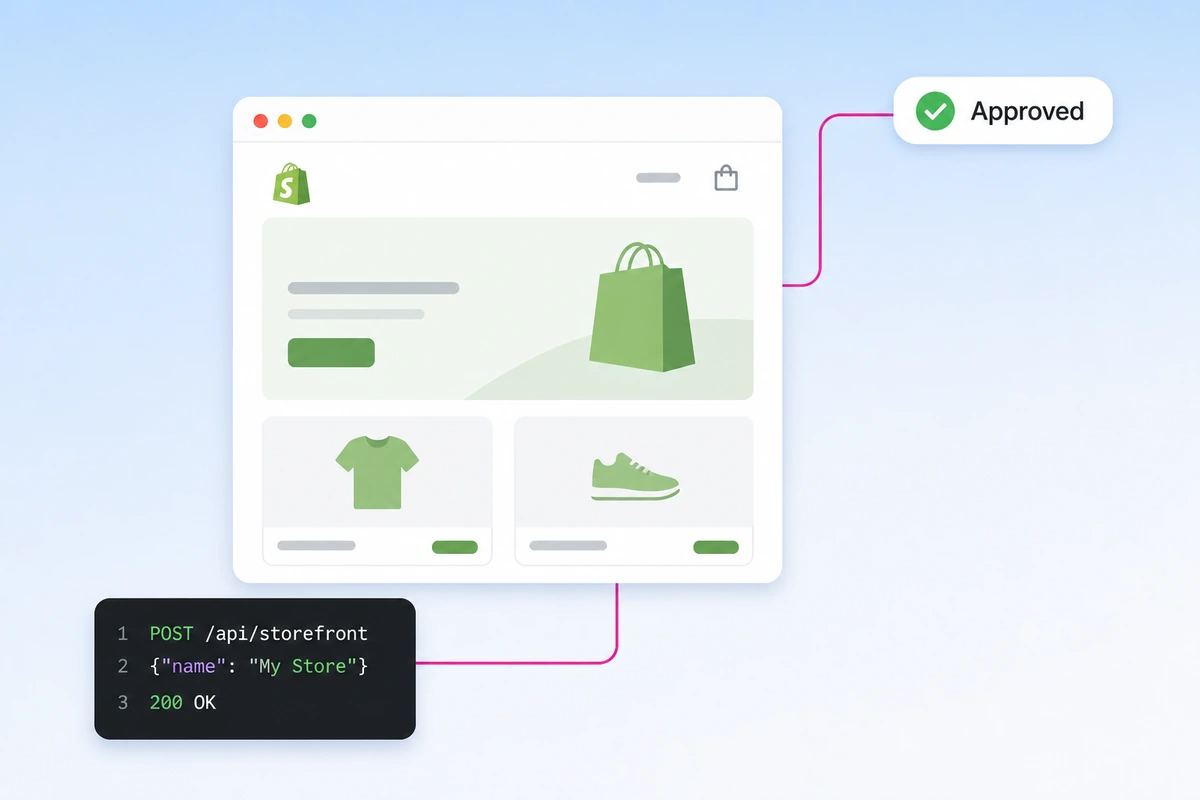
The second exemption submission was approved. That approval validated both the revised implementation and the way the product communicated its use of Shopify’s platform capabilities.
What Shopify AI Store Builder does
One-click Shopify store creation
The app turns a guided configuration into a repeatable store-building workflow. It prepares the storefront structure, applies the approved theme changes, and creates the initial product experience without requiring the merchant to repeat the same setup across multiple Shopify screens.
AI-scored product discovery
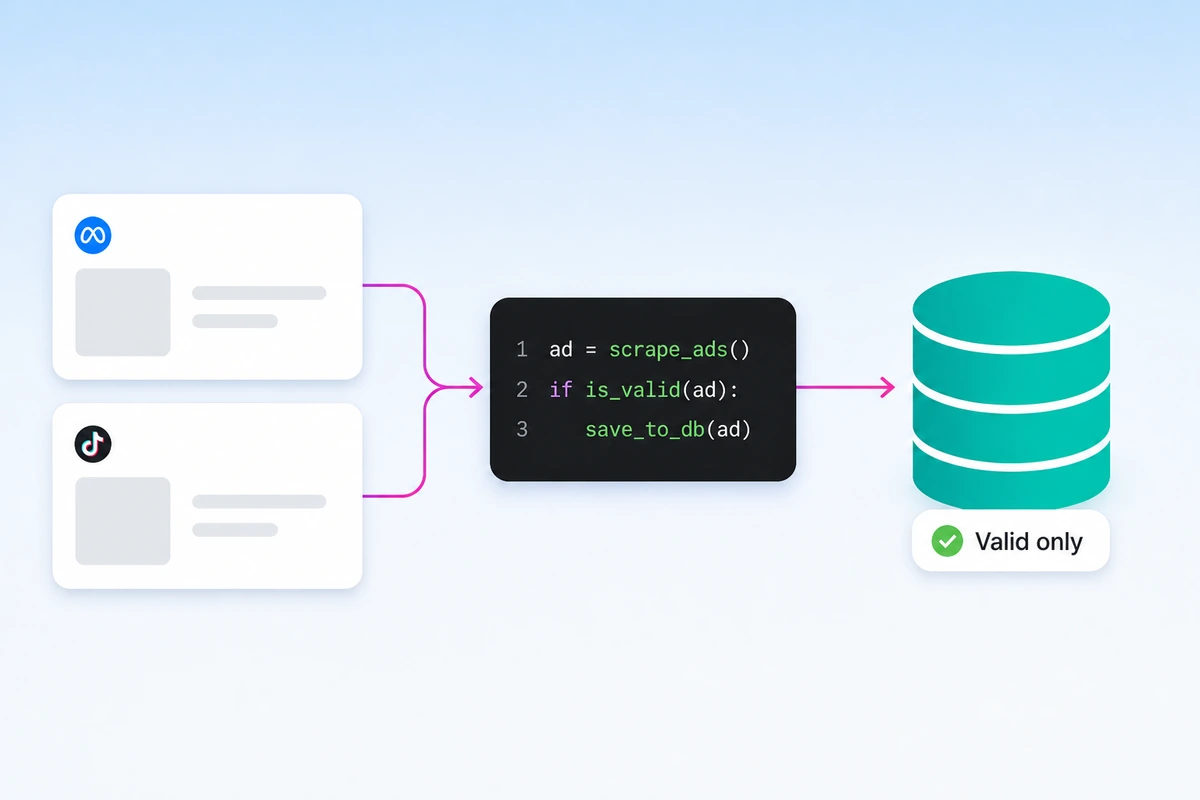
Merchants can review a curated product list ranked by AI-assisted scoring. The score is a decision-support signal rather than a promise of sales: it helps organize research and identify products worth validating, while leaving the final commercial decision with the merchant. A later pipeline strengthened that research by collecting live Meta and TikTok ads and filtering them into valid product candidates.
Product upload and catalog preparation
A selected product can be turned into a Shopify product record from the same workflow. The app prepares the catalog data needed for launch and reduces copy-and-paste work between research and the Shopify Admin.
Market and stock detection
Before and after import, the app checks relevant availability signals so merchants can see whether a product is suitable for the intended market and whether stock conditions have changed.
Out-of-stock recovery
Stock-outs are handled as an operational state, not a silent storefront failure. The app detects the issue and gives the merchant a path to correct, replace, pause, or otherwise manage the affected product before customers encounter an unreliable offer. That recovery idea later expanded into a dedicated Stock-Out Solver workflow.

Production architecture
The app is deployed on Railway with environment-based configuration, production data services, and Shopify credentials kept outside the codebase. Shopify authentication and API calls run through the production service; theme operations use the approved access path; product and inventory tasks are structured so failures can be surfaced and retried without repeating unrelated work.
That deployment model matters for App Store readiness. Reviewers need a stable installation and testing path, merchants need predictable callbacks and app URLs, and sensitive credentials must be managed as production secrets—not copied from a developer laptop.
Shopify App Store submission
After the product workflow and exemption-dependent features were complete, I prepared the public app listing and review build. The submission covered installation, onboarding, feature access, test instructions, and the behavior reviewers needed to verify.
The app passed Shopify App Store review and was approved for distribution. The result was not only a working integration, but a product that met the platform’s expectations for functionality, permissions, reviewer access, and merchant experience.
Outcome
- Built and deployed the complete Shopify AI Store Builder app on Railway
- Converted an initial Theme Asset API exemption rejection into an approved resubmission
- Delivered one-click store creation and AI-assisted product workflows
- Added market, inventory, and out-of-stock handling to reduce operational gaps
- Submitted the finished product to the Shopify App Store and received approval
Platform approval was part of the engineering work: narrow the permissions, make every automated change explainable, and give reviewers a reliable path through the product.
Where this work continued
The approved workflow became the foundation for a broader merchant application with staff dashboards, catalog publishing, stock-out recovery, and support tickets.
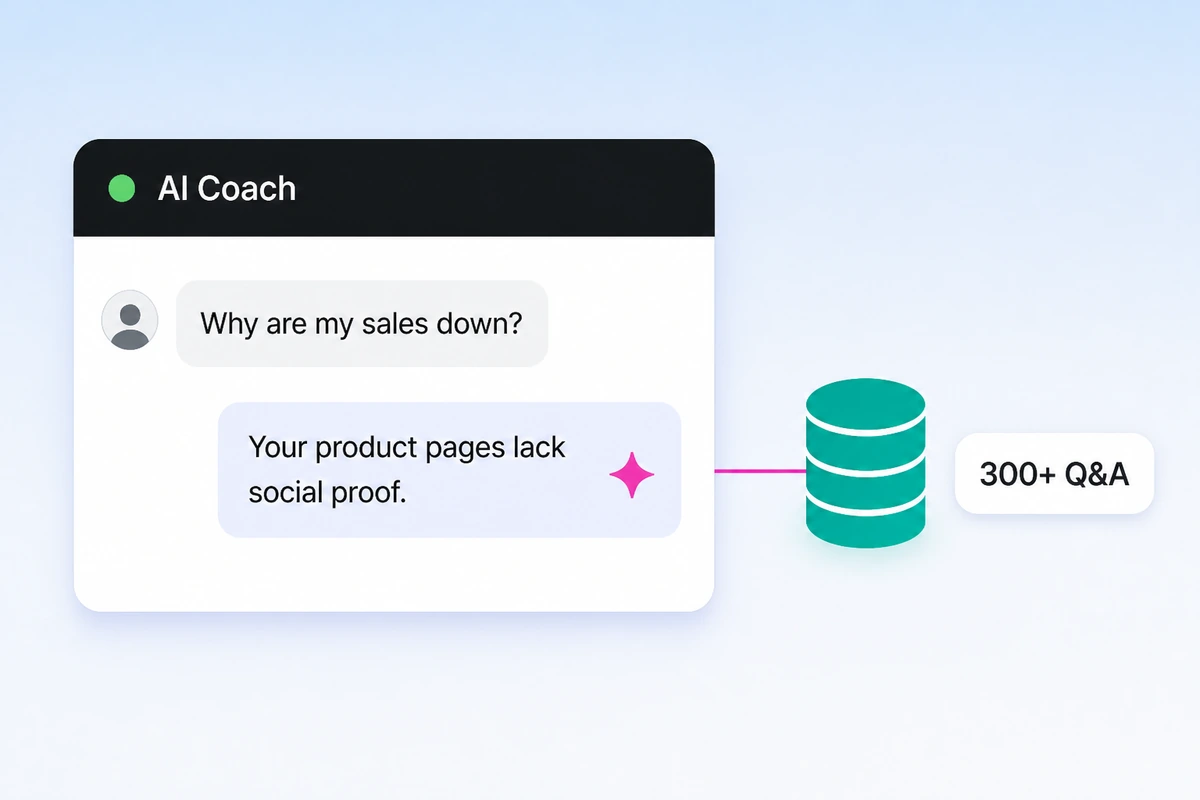
Its product candidates now come from filtered live ads data. Once a store is running, vetted merchant guidance helps turn its operating data into a practical next step, with a model available when the knowledge base has no strong match.
What I learned
A platform rejection can expose design and architecture weaknesses earlier than production traffic will. The strongest resubmission was not a longer justification for the same implementation. It was a safer implementation with a clearer reason for every privileged operation.
The project also reinforced a practical rule for AI commerce tools: automation should remove repetitive work, but it must keep merchant intent, inventory reality, and platform policy visible throughout the workflow.
- Shopify AI Store Builder
- Shopify App
- Shopify Admin API
- Theme Asset API
- AI Automation
- Product Research
- Inventory Automation
- Railway